
Mobile coverage for aged care and health facilities
Staff phones, care communication devices, families calling in and emergency calls all depend on mobile signal inside the building. In aged care communities, hospitals and clinics, that signal is often the first thing to go.
Why coverage matters in care settings
A care building runs around the clock, and the people who rely on mobile service inside it are not only staff.
Staff and care devices
Rosters, handsets and connected equipment that use the mobile network need signal in every wing and on every level.
Residents and families
Residents keep in touch with family on their own phones, and visitors expect their phones to work.
Emergency calls and the 3G closure
Triple Zero calls need signal, and since 3G closed, devices that once relied on it now need 4G indoors.
How we work in aged care
Ideally we start while the building is still going up, so donor locations, comms room space and cable pathways are planned with the build rather than added later.
- Survey during construction, with the design revised as the building plans develop.
- Managed repeater hubs, one G41 per carrier, or CEL-FI QUATRA for large buildings.
- Remote management, so firmware updates and network changes are handled without disturbing residents.
- Low-profile ceiling antennas chosen to suit care interiors.
- As-built signal testing and call tests at handover.
- Privacy first. We do not photograph residents, rooms or corridors, and we never name the facility.
Measured before and after in an aged care community
A single-storey residential aged care community in Victoria, fitted with a Platinum repeater hub (three CEL-FI G41 modules) and 20 ceiling dome antennas. We measured the same 11 test areas before installation in February 2026 and after commissioning in April 2026.
- 3 of 11
- Test areas better than −95 dBm before installation, February 2026
- 11 of 11
- Test areas better than −95 dBm on every carrier after commissioning, April 2026
- 20
- Ceiling dome antennas fed from one Platinum hub
| Carrier | Before, February 2026 | After, April 2026 |
|---|---|---|
| Optus | −108 to −86 dBm | −75.5 to −63 dBm |
| Telstra | −107 to −92 dBm | −79.5 to −69 dBm |
| Vodafone | −108 to −86 dBm | −75.5 to −63 dBm |
Per-area RSRP results from the Nextivity signal measurement reports for the survey and the final readings. Both reports used a pass criterion of RSRP better than −95 dBm, the same as Proeye's coverage target. In this regional area, Vodafone customers are served by the Optus network under a Multi-Operator Core Network (MOCN) arrangement, so the Vodafone and Optus readings are the same.
Aged care projects
In Victoria, six Platinum repeater hubs followed from a survey during construction to as-built testing. In New South Wales, a CEL-FI QUATRA system was commissioned with call tests on every level.
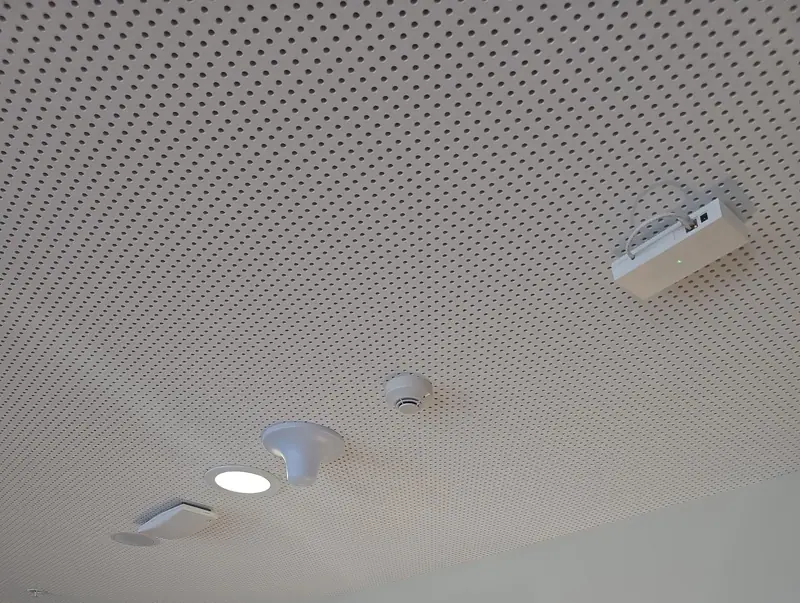
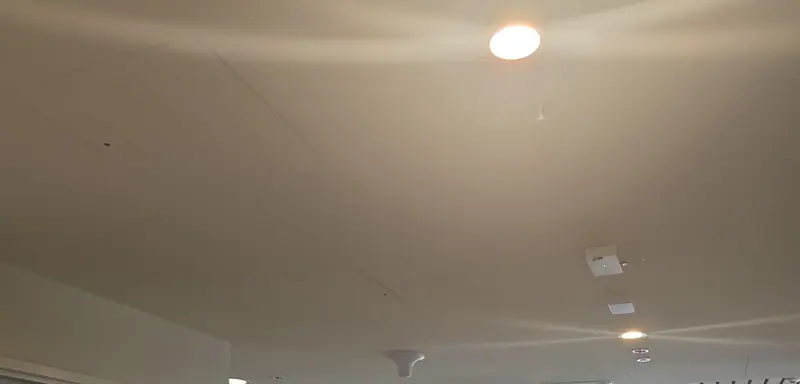
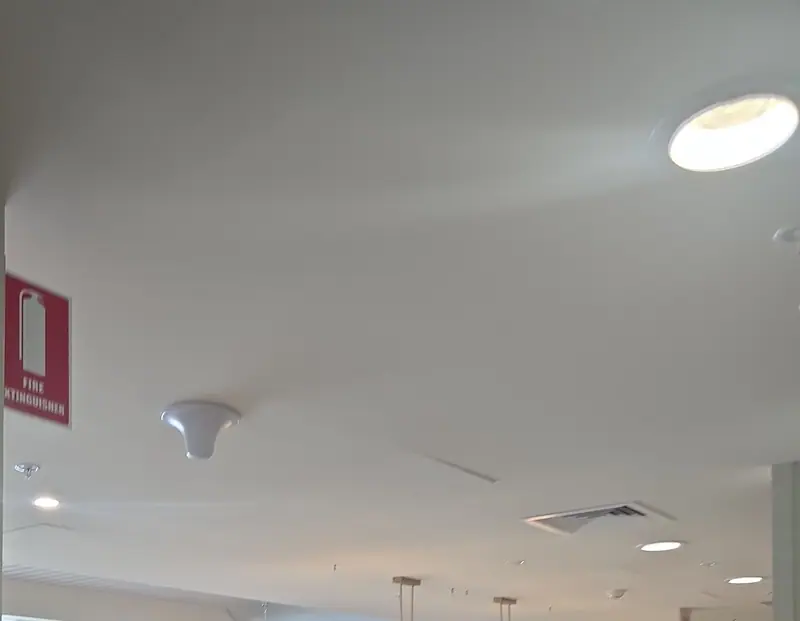
Low-profile dome antennas and a QUATRA Coverage Unit in the ceilings of a New South Wales aged care community: an acoustic ceiling, a lounge and a dining area. Photos are cropped to the ceiling.
Hospitals, clinics and health facilities
Proeye has completed mobile coverage work in hospitals with both CEL-FI QUATRA systems and Proeye G41 repeater hubs. Clinics, medical centres and other health buildings follow the same process: survey, design, installation and testing.
Where signal drops
Basements, plant rooms, lift cores and the inner wards and departments of large concrete buildings are where indoor signal usually fades. Imaging areas built with RF shielding block signal by design.
Staff on call
Clinicians and support staff rely on mobile phones for on-call contact and clinical communication, so coverage needs to reach every department, not just the entrance.
Patients and visitors
Patients and families use their own phones to stay in touch, and visitors expect their phones to work in waiting areas, wards and car parks.
How we work in health facilities
Every system starts from a survey of the building, and the work is planned with the facility so that patient care comes first.
- Scheduled around clinical operations, with surveys and installation agreed with the facility in advance.
- Ceiling access under the facility's infection-control and contractor procedures.
- Proeye G41 repeater hubs, one module per carrier, for clinics and smaller health buildings.
- CEL-FI QUATRA for multi-level hospitals and campuses, with coverage distributed across levels and buildings.
- Registered repeaters, with carrier authorisation obtained as part of the registration process.
- As-built signal testing and call tests at handover, against Proeye's −95 dBm target or the facility's own criterion where it sets one.
- Privacy first. We never photograph patients or name the facility.
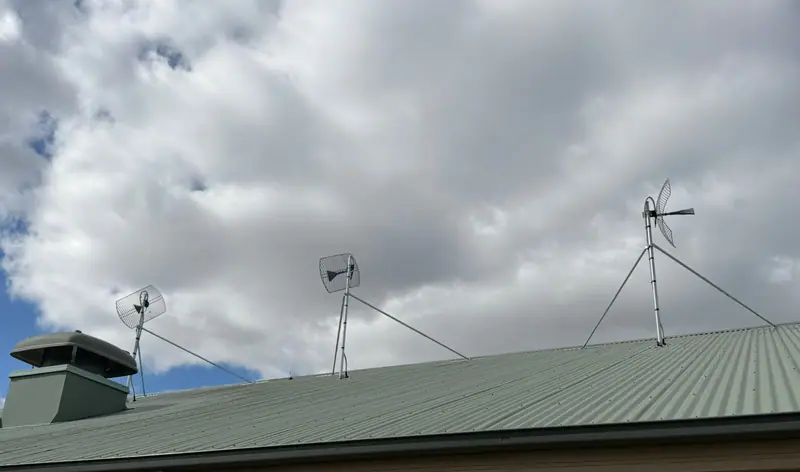
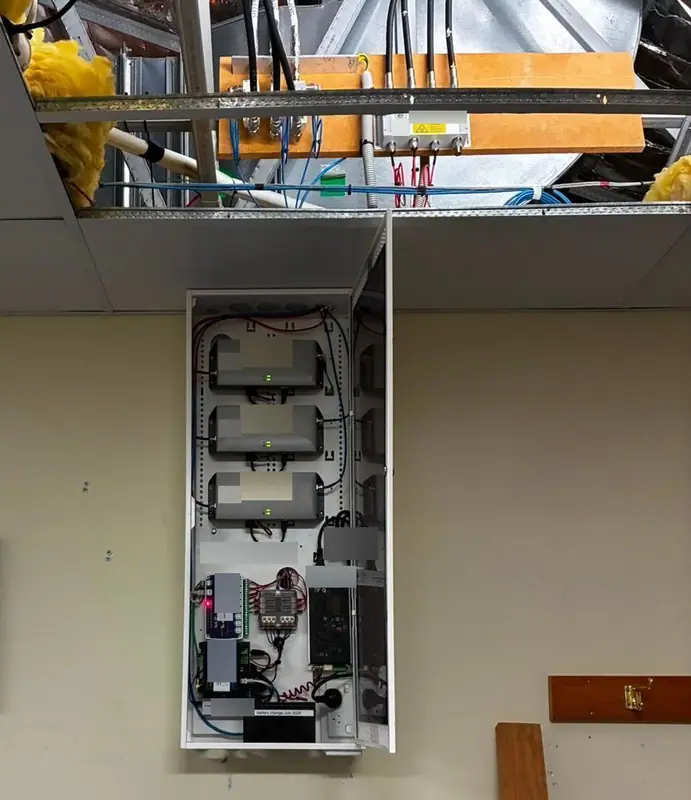
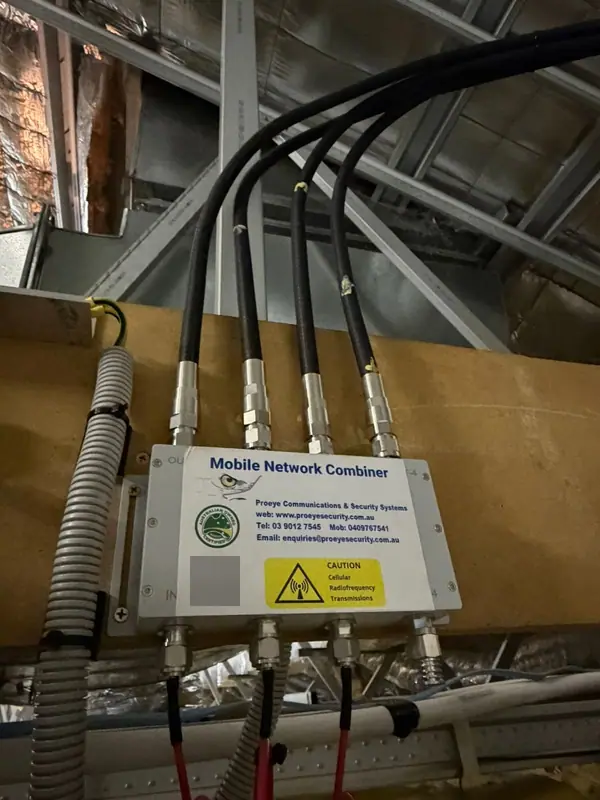
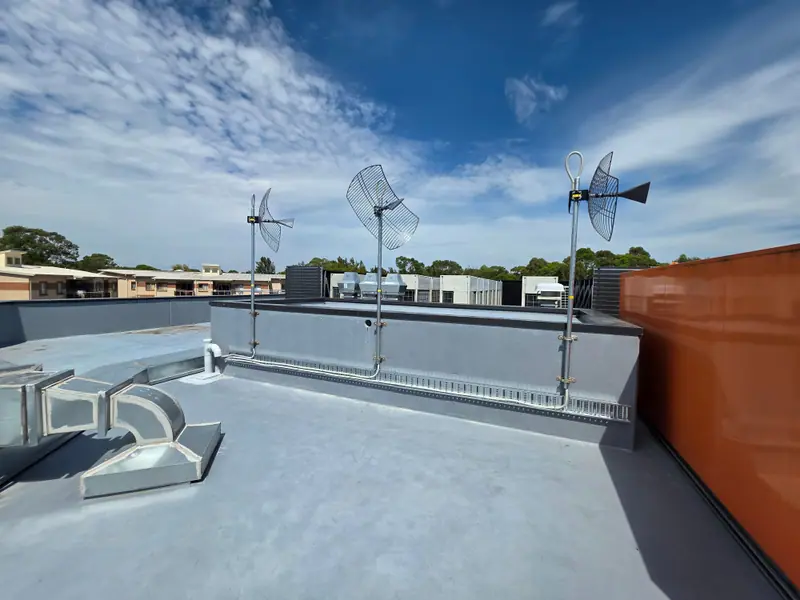
A New South Wales hospital: rooftop grid donor antennas, the repeater hub with one CEL-FI G41 module each for Telstra, Optus and Vodafone, and the mobile network combiner in the ceiling space. Site labels, serial numbers and QR codes are redacted. See the project
Tested after installation
- 13 of 13
- Tested areas passed on Telstra, Optus and Vodafone, August 2026
- −79 to −68
- Telstra: strongest 4G RSRP in each tested area, dBm
- −76 to −65
- Optus and Vodafone: strongest 4G RSRP in each tested area, dBm
From the post-installation signal measurement report for the hospital above. The report's pass criterion is 4G RSRP better than −95 dBm for each carrier, the same as Proeye's coverage target. The report has no before-installation readings. Its Vodafone readings are the same as Optus, from the same cells, which is consistent with Vodafone using the Optus network under a Multi-Operator Core Network (MOCN) arrangement.
See a system in a care building
For suitable prospective clients in aged care, we may be able to arrange a visit to an existing aged care installation in Victoria or New South Wales, such as a managed repeater hub.
Visits are available on request and depend on the operator's permission and access arrangements, with residents' privacy and care routines put first. We never identify our clients without their approval.
About site visitsAged care and health questions
Can you install in an occupied care building?
Yes. Work is planned with the operator around care routines, infection control and access, and kept out of resident areas wherever possible.
What is a Platinum repeater hub?
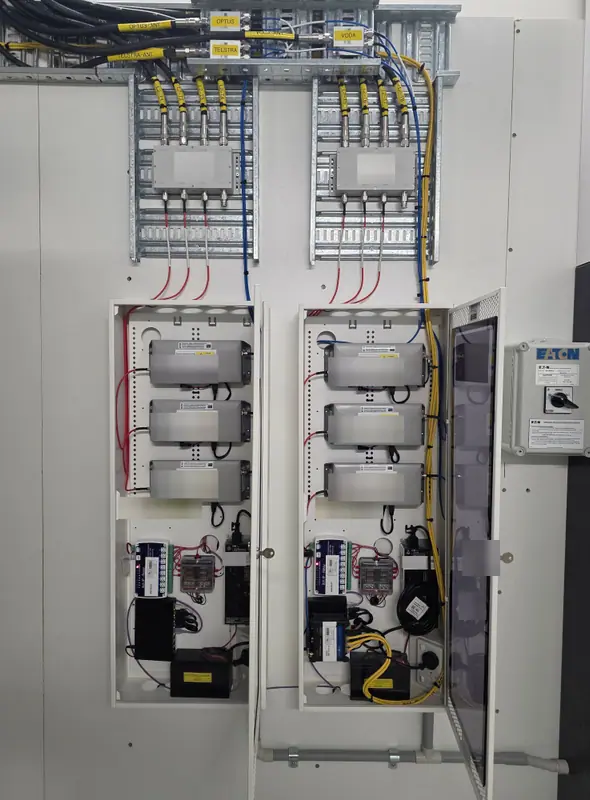
Our most fully managed hub: a vented cabinet with a window door, CEL-FI G41 modules, an IP relay for remote power cycling, a monitored power supply and a backup battery. Compare hub tiers.
Is it worth planning coverage during construction?
Yes, when it is possible. Donor antenna positions, comms room space and cable pathways are far easier to plan before ceilings close, and the design can follow the build.
Do you install mobile coverage in hospitals and clinics?
Yes. Proeye has completed hospital installations with both CEL-FI QUATRA and Proeye G41 repeater hubs. Clinics and smaller health buildings usually suit a G41 repeater hub, and multi-level hospitals and campuses usually suit QUATRA. Every design starts from a survey of the building. Start with a free desktop analysis.
Can the work be done without disrupting clinical areas?
Work is scheduled with the facility around clinical operations, and ceiling access follows the facility's infection-control and contractor procedures.
Planning coverage for a care or health building?
Start with a free initial desktop analysis, whether the building is open or still under construction.